Honouring Ēostre

Personal rituals to honour the goddess of rebirth

I’m not sure about you, but as I’ve got older, I feel a lot more connected to the changes of the seasons than I used to be. I love seeing the first signs of Spring, especially, like this year, if the winter has felt particularly cold, dark and wet. The first signs for me are when the Hawthorn bushes begin to show their first green leaves (they’re great in salads btw) and the blackthorn blossoms begin to spread across the hedgerows. I’m sure you have your own signs, local to you that you notice, but when these occur, for me it really feels like a new year, much more so than January 1st when we’re still deep in the darkest parts of winter.
I live near Stonehenge now, so events such as the solstices and the spring and autumn equinox are always front and centre here, and are celebrated as big events. Access to the stones themselves is opened up to the public and huge crowds come to celebrate and witness the sunrise on a new season just as people have for thousands of years.
Imagine being a neolithic farmer 5000 years ago and think how wonderful it would be to see the first signs that the long winter was finally starting to abate. That a rebirth of new growth was upon you and you could feed your family and livestock once more. I’m sure you’d want to celebrate, and people did. There’s archaeological evidence of huge celebrations at nearby sites, where people would gather from far and wide and feast on these occasions, welcoming in the change of seasons.
It’s no surprise that these astronomical events gave rise to many customs and festivals, some of which persist to this day. Tomorrow is Easter Sunday and in my house, Easter has always meant time off work and school and an excuse to eat a lot of chocolate. I’ve never been a religious person, so the Christian traditions of the holiday have always been something I’ve been aware of but never actively practiced and this year, I wanted to dig a little deeper into the history of this event and try to honour it with some new traditions of my own, something that would peel back Easter beyond the church tradition to something older, seasonal, and rooted in the land.
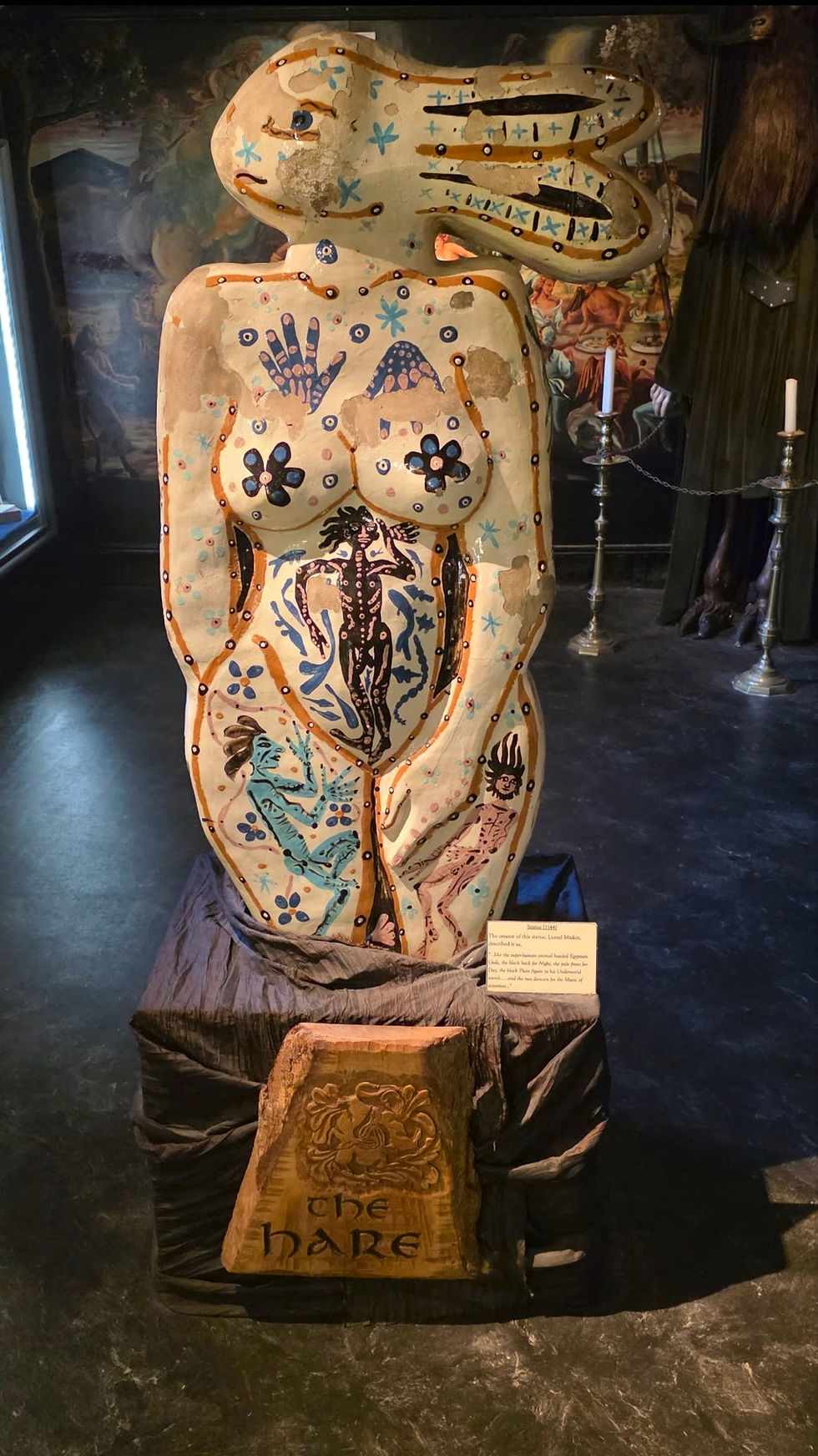
The figure most associated with that is usually the goddess Ēostre (or Ostara), the goddess associated with spring, renewal and dawn in early Anglo-Saxon paganism. She’s still a very important figure in neopagan and Wiccan traditions where she symbolises awakening and balance between darkness and light.
Our only direct historical reference to her comes from Bede’s De temporum ratione (“The Reckoning of Time”) where he recorded that the Anglo-Saxons held festivals in her honour during the month of Ēosturmōnaþ, which later corresponded to the Christian Easter season. Beyond this, there’s nothing. There’s no other historical mention of Ostara and Bede’s mention of her is the only primary source for her worship.
For me though, I think she’s still a perfect symbol for how I see the Spring and Easter seasons. Her name is linked linguistically to the Germanic words for “east” and “dawn”, the place of sunrise, and whatever the history, she’s become culturally associated with fertility and spring. Her image and associations symbolise how I feel about this time of year so for me, instead of imagining a fully structured religion, I like to think of Ēostre’s festival as more participation in the turning of the world. Something that’s personal to me and the importance I place on it for my life.
Therefore, there are a few simply traditions I’ve introduced this year. They won’t involve any commercialism or mass participation (although I welcome any of you who would like to join me in this), they will simply be personal and help me mark the turning of the world in my own way. Something mindful and personal in a scary world:
- I will greet the dawn: Ēostre is a dawn figure so I will wake before sunrise, go outside and will watch the light come in.
- I will honour the land and nature: Ēostre is a symbol of the land so I will scatter seeds for the birds, leave water out for the wildlife and take time to observe the new life. The new growth on the trees, the nesting birds etc.
- I will reflect on myself: Ēostre is a symbol of rebirth so I will reflect on what parts of me have survived the winter but are coming back to life. But also, on what parts of me need to be left behind.
To be clear, I will still eat a lot of chocolate and enjoy some well earned time off with my family, but this year, I will also honour Ēostre, in my own way.

Comments